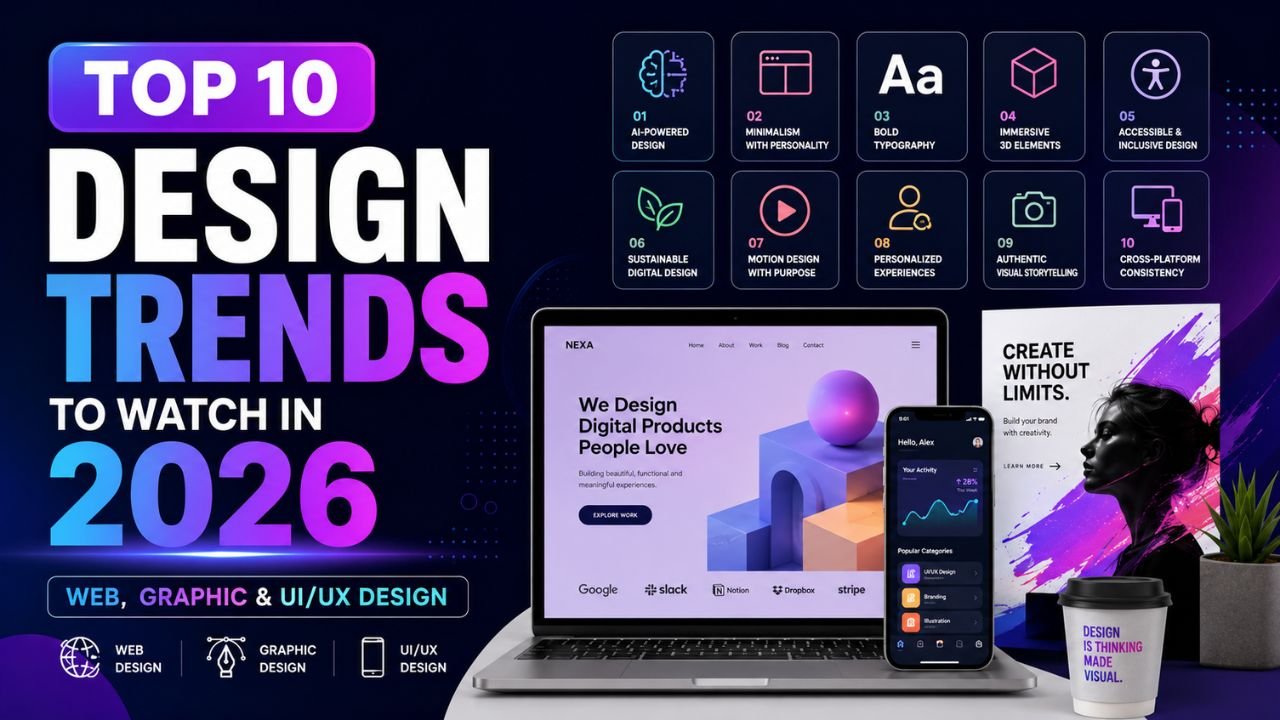
The design industry evolves rapidly, driven by new technologies, changing user expectations, and advances in artificial intelligence. Whether you’re a web designer, graphic artist, UI/UX designer, content creator, or beginner exploring the creative field, understanding current design trends helps you build modern, engaging, and user-friendly experiences.
In 2026, successful design is no longer just about aesthetics. It focuses on accessibility, performance, sustainability, personalization, and creating meaningful experiences for users.
This guide explores the top 10 design trends in 2026, explains why they matter, and shares practical tips for applying them to your projects.
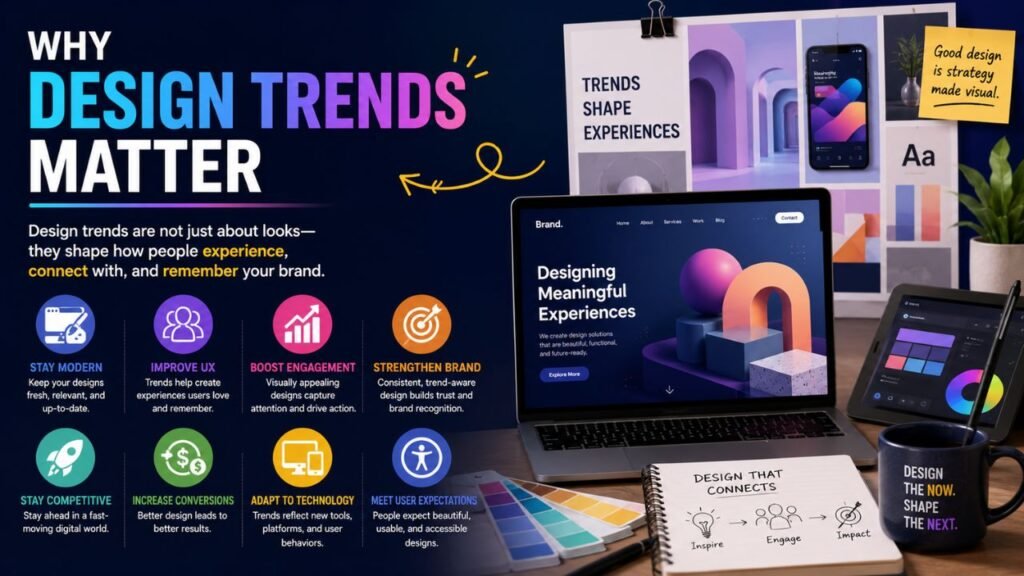
Why Design Trends Matter
Design trends are not rules—they’re indicators of how user preferences and technology are evolving. Following relevant trends can help you:-
- Create modern and visually appealing designs.
- Improve user experience (UX).
- Increase engagement and conversions.
- Strengthen brand identity.
- Stay competitive in the creative industry.
- Meet accessibility and usability standards.
The goal isn’t to follow every trend but to choose the ones that genuinely improve your work.
1. AI-Assisted Design Workflows
Artificial intelligence has become a powerful creative assistant rather than a replacement for designers.
AI tools now help with:
- Layout suggestions
- Image generation
- Background removal
- Color palette creation
- Content ideas
- Wireframe generation
While AI speeds up repetitive tasks, human creativity, strategy, and problem-solving remain essential. Designers who combine AI efficiency with original thinking are likely to produce the best results.
2. Minimalism with Personality
Minimalist design continues to dominate, but in 2026 it’s becoming warmer and more expressive.
Instead of plain white layouts, designers are using:
- Soft gradients
- Rounded corners
- Friendly typography
- Bold accent colors
- Subtle animations
The result is a clean interface that still feels approachable and memorable.
3. Bold Typography
Typography is increasingly becoming the focal point of many designs.
Large, readable headlines paired with strong font combinations help capture attention quickly.
Best practices include:
- Using clear font hierarchies.
- Maintaining high contrast.
- Limiting the number of font families.
- Prioritizing readability across devices.
Well-chosen typography improves both aesthetics and user experience.
4. Immersive 3D Elements
Advances in browser performance and graphic tools have made 3D design more accessible.
You’ll increasingly see:
- 3D product showcases
- Interactive illustrations
- Animated icons
- Realistic mockups
- Depth-enhancing visual effects
When used thoughtfully, 3D elements add realism without overwhelming the user.
5. Accessible and Inclusive Design
Accessibility is no longer optional—it’s a core part of modern design.
Designers should create experiences that are usable by as many people as possible.
Key considerations include:
- Sufficient color contrast.
- Keyboard navigation.
- Alt text for images.
- Readable font sizes.
- Clear labels and navigation.
- Responsive layouts.
Accessible design benefits everyone, not just users with disabilities.
6. Sustainable Digital Design
Sustainability is influencing digital experiences as well as physical products.
Designers are optimizing websites and applications by:
- Reducing unnecessary animations.
- Compressing images.
- Improving loading speed.
- Using lightweight assets.
- Simplifying interfaces.
Efficient design not only reduces resource usage but also improves performance and user satisfaction.
7. Motion Design with Purpose
Animations continue to enhance digital experiences, but successful motion design serves a purpose rather than acting as decoration.
Examples include:
- Button feedback
- Loading indicators
- Page transitions
- Scroll animations
- Interactive micro-interactions
Subtle movement can guide users and make interfaces feel more intuitive.
8. Personalized User Experiences
Modern users expect digital products to adapt to their preferences.
Examples of personalization include:
- Content recommendations
- Customized dashboards
- Theme preferences
- Saved settings
- Relevant product suggestions
Thoughtful personalization helps improve engagement without becoming intrusive.
9. Authentic Visual Storytelling
Audiences increasingly value genuine visuals over overly polished stock imagery.
Brands are using:
- Original photography
- Behind-the-scenes content
- Real customer stories
- Custom illustrations
- Hand-drawn elements
Authenticity helps build trust and creates stronger emotional connections.
10. Cross-Platform Design Consistency
Users interact with websites, mobile apps, tablets, smart TVs, and wearable devices.
Maintaining a consistent design system across platforms ensures:
- Familiar navigation
- Unified branding
- Better usability
- Easier maintenance
- Stronger recognition
Design systems, reusable components, and style guides make this consistency easier to achieve.
How Beginners Can Keep Up with Design Trends
If you’re just starting your design journey:
- Study high-quality websites and apps.
- Practice recreating layouts.
- Learn the basics of color theory and typography.
- Follow experienced designers.
- Build personal projects.
- Request feedback from peers.
- Stay curious and continue learning.
Remember, understanding design principles is more valuable than copying trends.
Common Design Mistakes to Avoid
Even with modern tools, avoid these common errors:
- Overusing animations.
- Choosing style over usability.
- Ignoring accessibility.
- Using too many fonts or colors.
- Creating cluttered layouts.
- Forgetting mobile responsiveness.
- Inconsistent spacing and alignment.
Simple, user-focused designs often outperform overly complex ones.
Best Tools for Modern Designers
To bring these trends into your workflow, consider using tools such as:-
- Figma
- Adobe Photoshop
- Adobe Illustrator
- Canva
- Blender
- Framer
- Penpot
- Krita
Choose tools based on your goals and budget rather than popularity alone.
Read also:-
- Free Stock Photos Websites List (2026): 15 Best Sites for Royalty-Free Images
- Does Digital Marketing Really Work
Frequently Asked Questions (FAQs)
Which design trend is the most important in 2026?
Accessibility, AI-assisted workflows, and user-centered design are among the most influential trends because they improve both usability and efficiency.
Are these trends suitable for beginners?
Yes. Beginners can gradually apply these ideas while learning the fundamentals of design. Strong foundational skills remain more important than following every trend.
Do I need expensive software to create modern designs?
No. Many free and affordable tools provide powerful features for web, graphic, and UI/UX design.
Will AI replace designers?
AI is changing how designers work, but creativity, strategic thinking, communication, and understanding user needs continue to require human expertise.
How often do design trends change?
Some trends evolve yearly, while core design principles—such as clarity, usability, consistency, and accessibility—remain valuable over time.
Read also:-
- Free Stock Photos Websites List (2026): 15 Best Sites for Royalty-Free Images
- How to Become an SEO Expert: Step-by-Step Guide for Beginners (2026 Guide)
Final Thoughts:-
Design in 2026 is about creating experiences that are useful, inclusive, visually appealing, and aligned with user needs. While trends introduce fresh ideas, lasting success comes from understanding the fundamentals of design and applying trends thoughtfully rather than following them blindly.
Whether you’re designing a website, mobile app, brand identity, or marketing materials, focus on solving real problems, maintaining consistency, and continuously improving your skills. By combining timeless design principles with carefully selected modern trends, you’ll create work that remains effective long after trends evolve.
