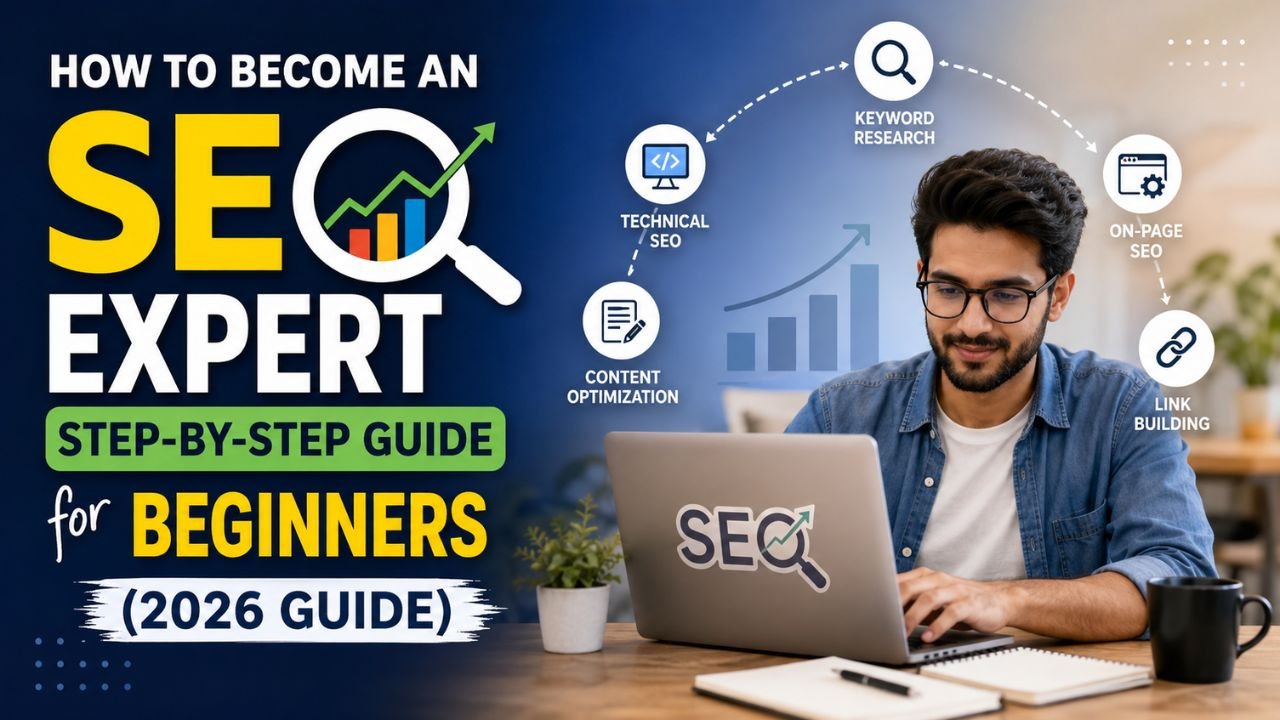
Search Engine Optimisation (SEO) remains one of the most valuable digital marketing skills in 2026. Businesses of every size want higher Google rankings, increased organic traffic, and more qualified leads. As a result, skilled SEO professionals are in high demand.
The good news is that you don’t need a marketing degree to become an SEO expert. With consistent learning, practical experience, and the right tools, anyone can master SEO and build a rewarding career.
In this guide, you’ll learn the exact steps to become an SEO expert, the skills you need, common mistakes to avoid, and how to keep improving in an ever-changing search landscape.
What Does an SEO Expert Do?
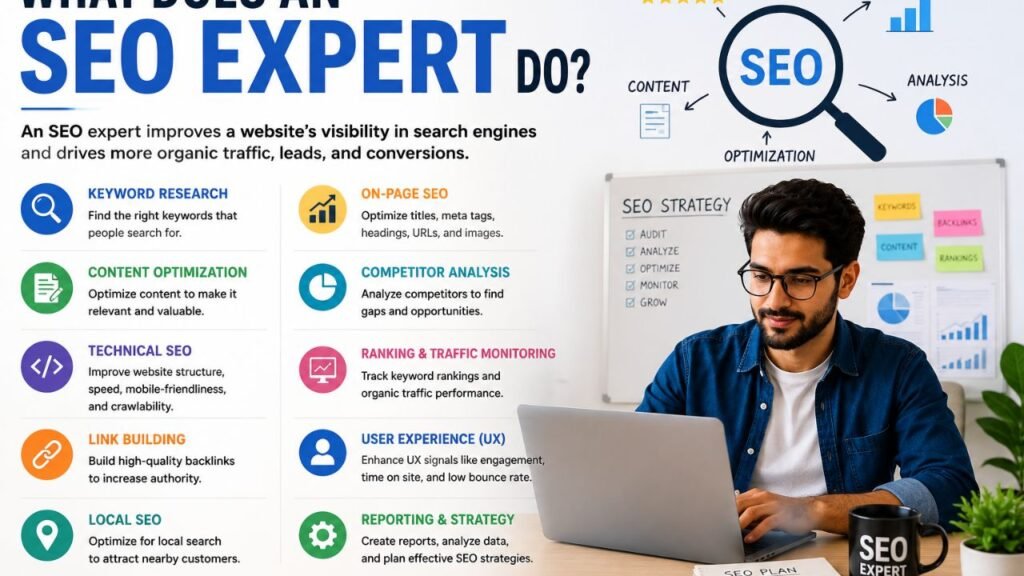
An SEO expert improves a website’s visibility in search engines by optimising content, technical performance, and website authority.
Typical responsibilities include:
- Keyword research
- Content optimisation
- Technical SEO audits
- On-page SEO improvements
- Link-building strategies
- Competitor analysis
- Website performance optimisation
- Monitoring rankings and traffic
- Analysing user behaviour
- Keeping up with Google algorithm updates
Their ultimate goal is to increase organic traffic while providing users with valuable and relevant content.
Step 1: Understand How Search Engines Work
Before learning SEO techniques, understand how search engines operate.
Google generally follows three major processes:
Crawling
Search bots discover new pages.
Indexing
Google stores and organises the discovered pages.
Ranking
Google determines which pages deserve the highest positions based on hundreds of ranking signals.
Understanding these fundamentals makes every SEO strategy easier to understand.
Step 2: Learn the Three Pillars of SEO
Every beginner should master these core areas.
On-Page SEO
This focuses on optimising individual pages.
Key elements include:
- Title tags
- Meta descriptions
- Header tags
- Internal linking
- Keyword placement
- Image optimisation
- URL structure
- Content quality
High-quality, user-focused content remains the strongest ranking factor.
Technical SEO
Technical SEO helps search engines crawl and index your website efficiently.
Learn about:
- XML sitemaps
- Robots.txt
- Core Web Vitals
- Mobile friendliness
- HTTPS security
- Structured data
- Canonical tags
- Page speed optimisation
A technically healthy website creates a better user experience.
Off-Page SEO
Off-page SEO builds your website’s authority.
Focus on:
- Quality backlinks
- Brand mentions
- Digital PR
- Guest blogging
- Local citations
- Social visibility
Avoid spammy link-building techniques, as they can harm your rankings.
Step 3: Learn Keyword Research
Keyword research is the foundation of SEO.
Instead of guessing what people search for, use data to discover real search queries.
Look for keywords with:
- Good search volume
- Real user intent
- Achievable competition
- High business relevance
Understand four search intents:
- Informational
- Navigational
- Commercial
- Transactional
Targeting the correct intent helps content rank more effectively.
Step 4: Master Content Optimisation
Google rewards helpful, original, and trustworthy content.
When writing SEO content:
- Answer user questions completely.
- Write naturally.
- Include primary and related keywords.
- Add headings for readability.
- Use short paragraphs.
- Include examples and statistics where appropriate.
- Optimise images with descriptive alt text.
- Add internal and external links.
Always write for people first and search engines second.
Step 5: Learn Essential SEO Tools
Professional SEO experts rely on tools to save time and make data-driven decisions.
Popular tools include:
- Google Search Console
- Google Analytics
- Google Keyword Planner
- Ahrefs
- Semrush
- Screaming Frog SEO Spider
- PageSpeed Insights
- Google Trends
You don’t need expensive software at the beginning. Free Google tools are enough to build a strong foundation.
Step 6: Practise on Your Own Website
Theory alone won’t make you an SEO expert.
Create a simple blog or website and practise:
- Writing articles
- Optimising pages
- Tracking rankings
- Improving site speed
- Building internal links
- Analysing traffic
Real-world experience teaches lessons that courses cannot.
Step 7: Learn Basic Technical Skills
You don’t need to become a developer, but understanding website basics helps.
Learn:
- HTML fundamentals
- CSS basics
- Website architecture
- URL structure
- Redirects
- Canonical URLs
- Schema markup
These skills make technical SEO much easier.
Step 8: Study Google’s Search Quality Guidelines
Google provides valuable documentation explaining what high-quality content looks like.
Pay special attention to:
- Helpful content
- User experience
- E-E-A-T principles
- Search intent
- Spam policies
Understanding these guidelines helps future-proof your SEO strategy.
Step 9: Stay Updated with Industry Changes
SEO changes constantly.
Google releases algorithm updates several times each year.
Follow trusted industry blogs, participate in SEO communities, and regularly test new strategies.
Successful SEO experts are lifelong learners.
Step 10: Build Your SEO Portfolio
Employers and clients value results more than certificates.
Create a portfolio showing:
- Traffic improvements
- Ranking growth
- Technical audits
- Content optimisation examples
- Keyword research reports
- Case studies
A strong portfolio builds credibility and demonstrates practical expertise.
Essential Skills Every SEO Expert Should Have
Besides SEO knowledge, successful professionals develop complementary skills.
These include:
- Content writing
- Data analysis
- Critical thinking
- Research
- Communication
- Problem-solving
- Basic coding knowledge
- Marketing strategy
Combining technical and creative skills makes you more valuable.
Common Mistakes Beginners Should Avoid
Many newcomers slow their progress by making avoidable mistakes.
Avoid:
- Keyword stuffing
- Buying backlinks
- Ignoring technical SEO
- Publishing thin content
- Forgetting mobile optimisation
- Chasing algorithm loopholes
- Copying competitors
- Neglecting user experience
Long-term SEO success always comes from creating value for users.
How Long Does It Take to Become an SEO Expert?
The timeline depends on your consistency.
- 1–2 months: Learn SEO fundamentals.
- 3–6 months: Build practical experience.
- 6–12 months: Handle real projects confidently.
- 12+ months: Develop advanced strategies and specialise.
SEO is a continuous learning process rather than a destination.
Career Opportunities in SEO
Once you develop your skills, you can work as:
- SEO Executive
- SEO Specialist
- Technical SEO Analyst
- SEO Consultant
- Content SEO Strategist
- Freelance SEO Expert
- Digital Marketing Manager
- In-house SEO Manager
Many professionals also start their own agencies or niche websites.
Read also:-
Final Thoughts:-
Becoming an SEO expert doesn’t happen overnight, but it’s one of the most rewarding digital skills you can learn. Start with the fundamentals, practise consistently, analyse your results, and adapt to industry changes.
Remember, successful SEO isn’t about manipulating search engines—it’s about helping users find the best possible answers. If you focus on creating valuable content, improving user experience, and following Google’s best practices, you’ll build sustainable rankings and long-term success.
Whether your goal is freelancing, landing a digital marketing job, or growing your own business, mastering SEO is an investment that continues to pay dividends for years to come.
Frequently Asked Questions (FAQs)
Can I learn SEO without a degree?
Yes. Most SEO professionals are self-taught through online resources, experimentation, and practical experience.
Is SEO still a good career in 2026?
Absolutely. As businesses continue investing in organic search visibility, demand for skilled SEO professionals remains strong.
Do I need coding skills for SEO?
No, but basic HTML, CSS, and technical website knowledge are helpful for solving SEO issues more effectively.
Which SEO tool should beginners use?
Start with Google Search Console and Google Analytics. As your skills grow, explore tools like Ahrefs or Semrush.
How often should I update my SEO knowledge?
Regularly. Search engines evolve continuously, so staying informed about algorithm updates and best practices is essential.
