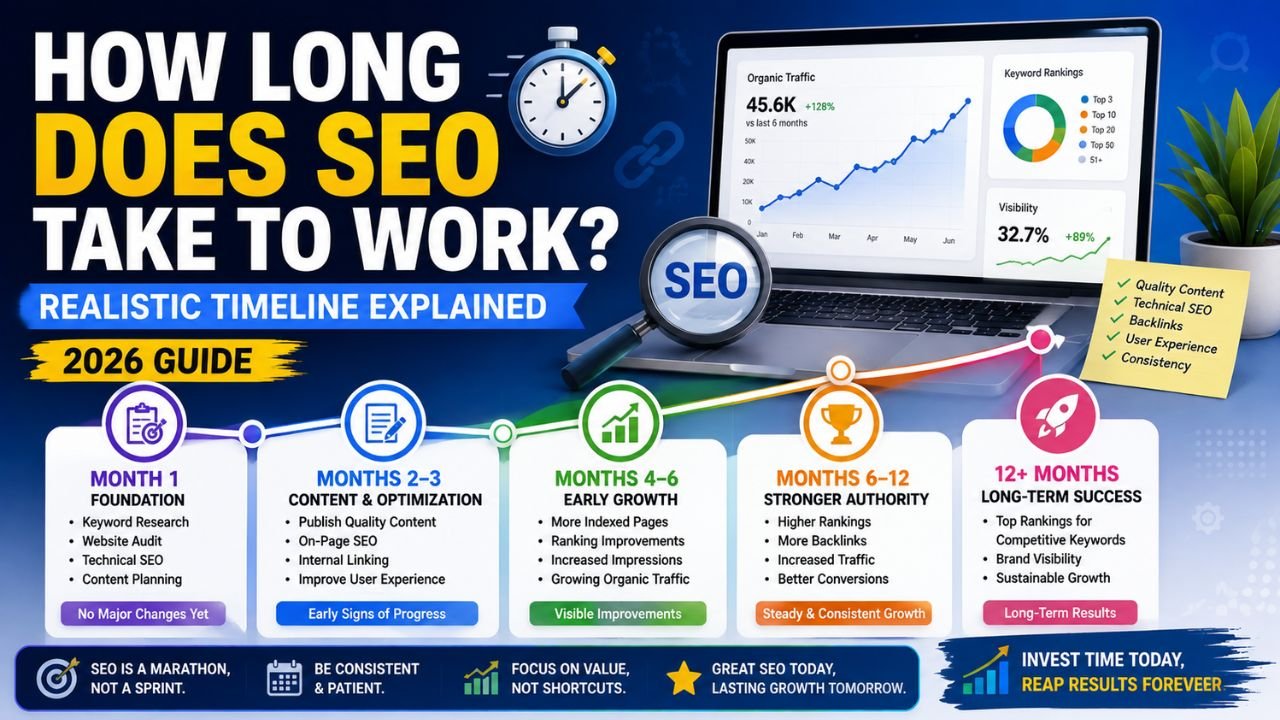
One of the most common questions beginners ask is:
“How long does SEO take to work?”
The honest answer is: SEO is a long-term strategy, not a quick fix.
Unlike paid advertising, where traffic can begin as soon as a campaign launches, SEO requires time for search engines to discover, crawl, index, evaluate, and rank your content. Factors such as website quality, competition, content relevance, backlinks, technical SEO, and user experience all influence how quickly results appear.
In this guide, you’ll learn what a realistic SEO timeline looks like, what affects your progress, and how to build a strategy that supports sustainable growth.
Why SEO Takes Time
Search engines aim to deliver the most helpful and trustworthy content to users. Before your pages can rank well, they need to demonstrate value over time.
This process generally involves:
- Crawling your pages.
- Indexing new content.
- Understanding topical relevance.
- Evaluating content quality.
- Assessing user experience.
- Interpreting signals from internal and external links.
- Comparing your pages with competing websites.
Because search results are constantly changing, SEO is an ongoing process rather than a one-time task.
A Realistic SEO Timeline
Although every website is different, the following timeline reflects what many beginners can reasonably expect.
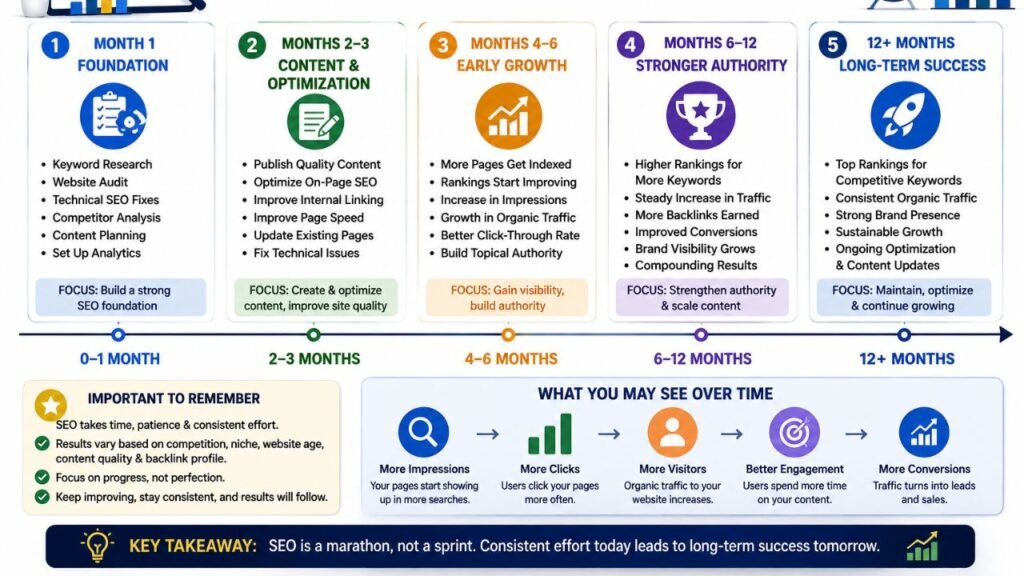
Month 1: Research and Foundation
During the first month, focus on building a strong SEO foundation.
Tasks include:
- Keyword research
- Website audit
- Competitor analysis
- Technical SEO improvements
- Content planning
- Optimizing existing pages
- Setting up analytics tools
At this stage, ranking improvements may be limited, but you’re creating the groundwork for future success.
Months 2–3: Content Creation and Optimization
Once the foundation is in place, begin publishing high-quality, user-focused content.
Priorities include:
- Answering search intent.
- Optimizing title tags and headings.
- Improving internal linking.
- Enhancing page speed.
- Updating older articles.
- Building topical authority.
Some long-tail keywords may begin to gain visibility during this period.
Months 4–6: Early Growth
Many websites start seeing measurable improvements between four and six months.
Possible outcomes include:
- Increased keyword rankings.
- More indexed pages.
- Growth in organic traffic.
- Higher impressions in search results.
- Improved click-through rates.
Results vary depending on competition, website age, and the consistency of your SEO efforts.
Months 6–12: Stronger Authority
By this stage, websites that consistently publish valuable content and maintain good technical health often experience more stable growth.
You may notice:
- Higher rankings for competitive keywords.
- Increased referral traffic.
- Better brand visibility.
- More backlinks earned naturally.
- Improved conversions.
SEO gains often compound over time as your website builds authority.
Beyond 12 Months
Long-term SEO success comes from continuous improvement.
Ongoing activities include:
- Updating content.
- Publishing new resources.
- Monitoring technical performance.
- Refining keyword targeting.
- Strengthening internal linking.
- Earning relevant backlinks.
Websites that invest consistently in quality often see sustained organic growth over the years.
Factors That Affect SEO Results
No two websites achieve results at exactly the same pace. Several factors influence your timeline.
Website Age
Established websites with a history of quality content may gain traction more quickly than brand-new sites, though new websites can still perform well with focused strategies.
Competition
Ranking for highly competitive keywords usually takes longer than targeting specific, less competitive search queries.
For beginners, long-tail keywords often provide better opportunities to build visibility.
Content Quality
Helpful, original, and well-structured content generally performs better than thin or repetitive pages.
Focus on creating content that genuinely answers users’ questions.
Technical SEO
Technical issues can slow progress.
Regularly check:
- Page speed
- Mobile responsiveness
- Crawl errors
- Broken links
- XML sitemap
- HTTPS security
A technically sound website makes it easier for search engines to understand and index your content.
Backlinks
Relevant backlinks from trustworthy websites can strengthen your site’s authority over time.
Rather than chasing large numbers of links, prioritize earning them through valuable content and ethical outreach.
User Experience (UX)
Search engines value websites that provide positive user experiences.
Improve:
- Navigation
- Readability
- Mobile usability
- Page speed
- Accessibility
Satisfied users are more likely to stay longer, engage with your content, and return in the future.
What You Should Do While Waiting
SEO is not about waiting passively. Continue improving your website by:
- Publishing new articles regularly.
- Refreshing outdated content.
- Monitoring keyword performance.
- Fixing technical issues.
- Building internal links.
- Promoting your content through appropriate channels.
- Learning from analytics.
Consistent effort often delivers better long-term results than trying to make dramatic changes all at once.
Common SEO Mistakes That Delay Results
Many beginners unintentionally slow their progress by:
- Expecting instant rankings.
- Targeting overly competitive keywords.
- Publishing low-quality content.
- Ignoring search intent.
- Neglecting technical SEO.
- Buying backlinks.
- Failing to update existing pages.
- Forgetting internal linking.
Avoiding these mistakes helps build a stronger foundation for long-term growth.
Tips to Improve SEO Faster
While no one can guarantee rapid rankings, these practices support steady improvement:
- Perform thorough keyword research.
- Create comprehensive content.
- Optimize page titles and meta descriptions.
- Use descriptive headings.
- Improve page speed.
- Ensure mobile-friendly design.
- Build a logical internal linking structure.
- Earn relevant backlinks naturally.
- Monitor performance using analytics.
- Keep content updated.
SEO rewards consistency rather than shortcuts.
Signs Your SEO Is Working
Even before dramatic ranking improvements, you may notice encouraging indicators such as:
- More pages appearing in search results.
- Increased impressions.
- Growth in organic clicks.
- Better keyword visibility.
- Longer user engagement.
- More returning visitors.
These early signals often indicate that your SEO strategy is moving in the right direction.
Frequently Asked Questions (FAQs)
How long does SEO usually take?
Many websites begin seeing measurable improvements within four to six months, while stronger long-term results often require six to twelve months or more.
Can SEO work in one month?
You may complete important foundational work during the first month, but significant ranking improvements are generally uncommon in such a short period.
Does publishing more content speed up SEO?
Publishing helpful content consistently can support growth, but quality, relevance, and search intent are more important than quantity alone.
Is SEO a one-time task?
No. SEO requires ongoing maintenance, content updates, technical improvements, and performance monitoring.
Why isn’t my website ranking?
Common reasons include limited content, strong competition, technical issues, insufficient authority, or content that doesn’t fully satisfy user intent.
Read also:-
- How to Start a Blog and Earn Money From Google AdSense (2026 Beginner’s Guide)
- Free Stock Photos Websites List (2026): 15 Best Sites for Royalty-Free Images
Final Thoughts:-
SEO is a marathon, not a sprint. While it’s natural to want quick results, sustainable organic growth takes time, patience, and consistent effort. Rather than focusing solely on rankings, concentrate on creating valuable content, improving your website’s technical performance, and delivering an excellent user experience.
For complete beginners, the best strategy is to build a strong foundation, publish helpful content regularly, monitor progress through analytics, and refine your approach based on real data. Over time, these consistent improvements can lead to stronger search visibility, increased organic traffic, and lasting business growth.
In 2026, the websites that succeed with SEO are those that prioritize users first and treat optimization as an ongoing investment rather than a one-time project.
