
Blogging remains one of the most reliable ways to build an online presence and generate passive income. Whether you want to share your expertise, grow a personal brand, or create a long-term online business, a blog can help you achieve your goals.
With Google AdSense, you can earn money by displaying relevant advertisements on your website. While success doesn’t happen overnight, a well-planned blog with valuable content and consistent effort can become a sustainable source of income.
This step-by-step guide explains how to start a blog on any platform and prepare it for Google AdSense approval while following Google’s Helpful Content and E-E-A-T guidelines.
What Is Blogging?
A blog is a website where you regularly publish articles, guides, tutorials, reviews, or other helpful content for a specific audience.

Modern blogs cover almost every topic, including:
- Technology
- SEO & Digital Marketing
- Finance
- Health & Fitness
- Travel
- Education
- Food & Recipes
- Lifestyle
- Business
- AI Tools
The key to successful blogging is consistently solving real problems for your readers.
What Is Google AdSense?
Google AdSense is an advertising program that allows publishers to earn revenue by displaying ads on their websites. When visitors view or click eligible ads, publishers receive a share of the advertising revenue.
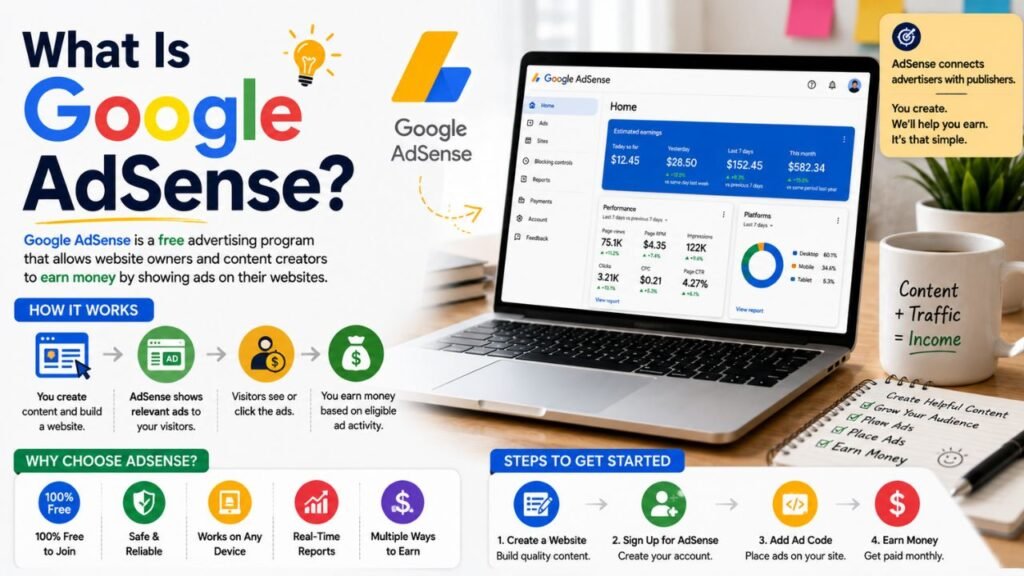
Your earnings depend on factors such as:
- Website traffic
- Audience location
- Content niche
- Advertiser demand
- User engagement
AdSense works best when combined with high-quality content and organic search traffic.
Step 1: Choose a Profitable Blog Niche
Your niche determines the audience you attract and the topics you’ll write about.
Look for a niche that combines:
- Personal interest or expertise
- Strong search demand
- Long-term content opportunities
- Monetization potential
Popular blogging niches include:
- Technology
- Web Design
- SEO
- Digital Marketing
- Personal Finance
- Career Advice
- Education
- Travel
- Home Improvement
- Food
Avoid selecting a niche solely because it appears profitable. Long-term consistency is much easier when you enjoy writing about the subject.
Step 2: Select a Blogging Platform
You can build a blog using several popular platforms.
WordPress.org
Ideal for complete control, customization, and scalability.
Blogger
A free platform owned by Google that’s easy for beginners.
Wix
A drag-and-drop website builder with blogging features.
Squarespace
Suitable for creators who want a polished design with minimal setup.
Whichever platform you choose, ensure it supports responsive design, SEO settings, and fast loading speeds.
Step 3: Register a Domain Name
A custom domain makes your blog look professional and trustworthy.
Tips for choosing a domain:
- Keep it short and memorable.
- Avoid numbers and hyphens.
- Choose a relevant name.
- Prefer a
.comif available. - Reflect your niche or brand.
A strong domain helps with branding and user recall.
Step 4: Choose Reliable Hosting
If you’re using a self-hosted platform, choose a hosting provider known for:
- High uptime
- Fast performance
- Good customer support
- SSL certificates
- Regular backups
- Security features
Fast-loading websites provide a better user experience and support SEO.
Step 5: Design Your Blog
Your blog should be clean, simple, and easy to navigate.
Include essential pages such as:
- Home
- About Us
- Contact
- Privacy Policy
- Disclaimer
- Terms & Conditions
- Sitemap
Use readable fonts, mobile-friendly layouts, and intuitive navigation to improve user experience.
Step 6: Publish Helpful Content
Content is the foundation of every successful blog.
Before writing, identify the questions your audience is searching for and provide clear, practical answers.
Focus on creating:
- Tutorials
- How-to guides
- Product comparisons
- Checklists
- Beginner resources
- Industry insights
Write for people first, not search engines. Helpful, original content builds trust and encourages repeat visits.
Step 7: Learn Basic SEO
Search Engine Optimization (SEO) helps your content appear in search results.
Essential SEO practices include:
- Keyword research
- Descriptive page titles
- Optimized meta descriptions
- Proper heading structure (H1–H3)
- Internal linking
- Image optimization
- Fast page speed
- Mobile-friendly design
Good SEO increases your chances of attracting consistent organic traffic.
Step 8: Build Authority with E-E-A-T
Google values content that demonstrates:
- Experience: Share practical insights or real examples.
- Expertise: Publish accurate and well-researched information.
- Authoritativeness: Build credibility through quality content and references.
- Trustworthiness: Be transparent about your identity, policies, and contact information.
Include an author bio, update older articles regularly, and cite reliable sources when appropriate.
Step 9: Prepare for Google AdSense Approval
Before applying for AdSense, ensure your website includes:
- Original content
- Multiple high-quality articles
- Clear navigation
- Essential legal pages
- Mobile responsiveness
- Fast loading speed
- No copyrighted or copied material
- A positive user experience
Avoid publishing thin, AI-generated, or duplicate content, as it may reduce your chances of approval.
Step 10: Apply for Google AdSense
Once your blog is established, submit your website for review through the Google AdSense program.
If approved, you’ll be able to place ads on eligible pages and begin earning revenue as your traffic grows.
Approval may take several days or weeks, depending on your site’s readiness and compliance.
Tips to Increase AdSense Earnings
Growing AdSense income requires more than simply adding ads.
Best practices include:
- Publish content consistently.
- Target keywords with search demand.
- Improve page speed.
- Write evergreen articles.
- Update old posts regularly.
- Build internal links.
- Optimize for mobile users.
- Focus on user experience.
- Increase organic traffic through SEO.
Higher-quality traffic generally leads to better long-term earnings.
Common Blogging Mistakes to Avoid
Many beginners struggle because they:
- Choose overly broad topics.
- Publish inconsistent content.
- Ignore SEO.
- Copy content from other websites.
- Use too many ads.
- Neglect website performance.
- Skip legal pages.
- Expect instant income.
Successful blogs grow gradually through consistency and continuous improvement.
Can You Really Make Money Blogging?
Yes—but blogging should be viewed as a long-term investment rather than a quick-income opportunity.
Many successful bloggers combine AdSense with other revenue streams such as:
- Affiliate marketing
- Digital products
- Online courses
- Sponsored content
- Freelance services
- Email marketing
Diversifying your income makes your blog more sustainable over time.
Read also:-
- Free Stock Photos Websites List (2026): 15 Best Sites for Royalty-Free Images
- Does Digital Marketing Really Work
Final Thoughts:-
Starting a blog and earning money from Google AdSense is achievable for beginners who focus on creating valuable, trustworthy, and original content. Success depends on choosing the right niche, publishing consistently, learning SEO, and providing a positive experience for readers.
Rather than chasing shortcuts, invest your time in building a helpful resource that solves real problems. Over time, strong content, search visibility, and reader trust can turn your blog into a reliable source of income and a valuable digital asset.
Frequently Asked Questions (FAQs)
How many articles should I publish before applying for AdSense?
There is no official minimum, but many successful publishers apply after publishing 20–30 well-written, original articles and completing all essential website pages.
Can I start a blog for free?
Yes. Platforms like Blogger allow you to create a blog for free, although a custom domain and self-hosted website provide greater flexibility and professionalism.
How long does it take to earn money from blogging?
The timeline varies. Many blogs take several months to build traffic, while consistent publishing and SEO can significantly improve long-term results.
Is SEO necessary for blogging?
Yes. SEO helps search engines understand your content and can increase organic traffic, making it easier to grow your audience and AdSense earnings.
Can I use AI tools to write blog posts?
AI can assist with brainstorming and drafting, but articles should always be reviewed, edited, fact-checked, and enhanced with original insights to ensure accuracy, usefulness, and compliance with Google’s quality expectations.
