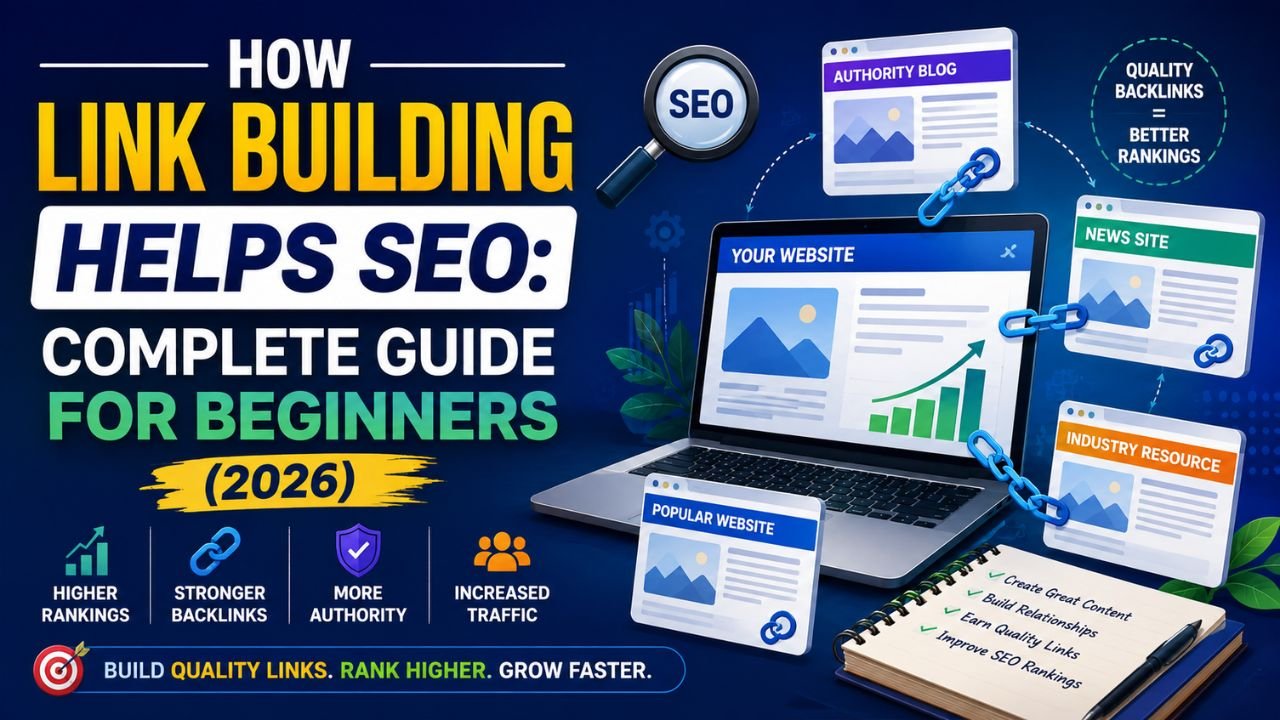
Search Engine Optimization (SEO) is made up of many moving parts, but one factor continues to play a major role in improving a website’s visibility—link building.
When reputable websites link to your content, search engines interpret those links as signals that your pages are valuable, trustworthy, and worth showing to users. However, modern link building is no longer about collecting as many backlinks as possible. Google’s algorithms are far better at identifying manipulative tactics and now reward websites that earn links naturally through high-quality content and genuine authority.
In this guide, you’ll learn what link building is, why it matters, how it helps SEO, and which strategies remain effective in 2026.
What Is Link Building?
Link building is the process of acquiring hyperlinks from other websites that point to your pages.
These hyperlinks, commonly called backlinks, help search engines discover, crawl, and evaluate your content.
For example, if a respected marketing blog links to your SEO guide, that backlink can act as a signal that your content provides value to readers.
The emphasis today is on earning relevant, editorially placed backlinks—not buying or manipulating them.
Why Link Building Matters for SEO
Backlinks are one of several signals search engines use to assess the quality and relevance of web pages.
High-quality backlinks can contribute to:
- Better search visibility
- Increased website authority
- Faster discovery of new content
- More referral traffic
- Greater brand credibility
- Improved rankings for competitive keywords
It’s important to remember that links work best when combined with strong on-page SEO, technical SEO, and genuinely helpful content.
How Link Building Helps SEO
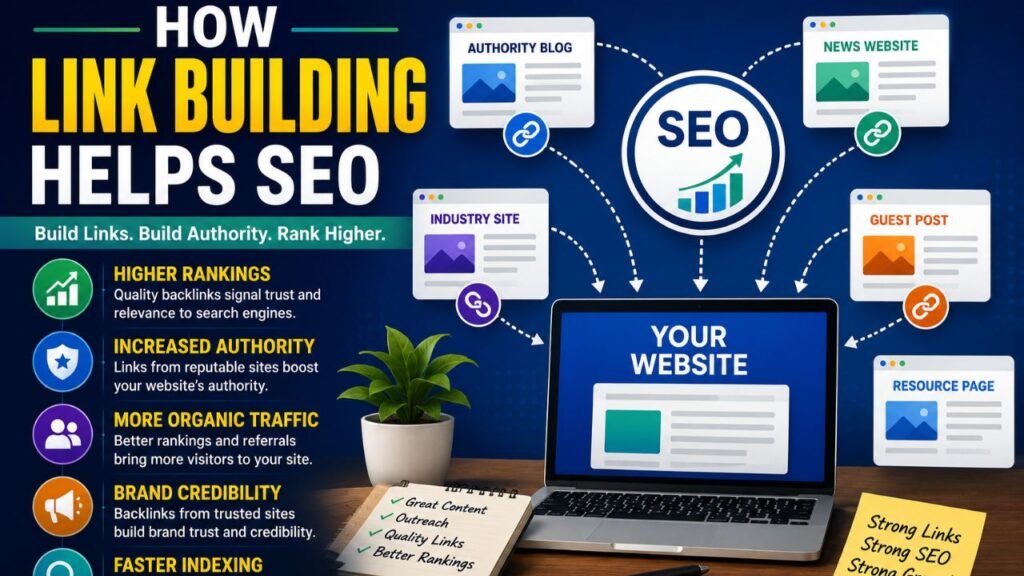
1. Builds Website Authority
When authoritative websites link to your content, search engines receive additional signals that your pages may be reliable and useful.
Authority grows gradually through consistent publication of valuable content and the natural acquisition of quality backlinks.
2. Improves Search Rankings
Pages with relevant, high-quality backlinks often have a better opportunity to rank for competitive search terms.
However, rankings are influenced by many factors, including:
- Content quality
- Search intent
- User experience
- Technical SEO
- Internal linking
- Website performance
Link building supports these efforts rather than replacing them.
3. Increases Organic Traffic
Higher visibility in search results can lead to more organic visitors.
In addition, backlinks themselves may send referral traffic when users click links from other websites to yours.
4. Helps Search Engines Discover Content
Search engine crawlers follow links to find new pages.
If your newest article receives links from relevant websites, it may be discovered and indexed more efficiently.
5. Builds Brand Trust
Appearing on respected industry websites increases credibility with both users and search engines.
Thought leadership articles, expert interviews, research reports, and practical guides often earn trustworthy backlinks over time.
Types of Backlinks
Editorial Backlinks
These are naturally earned because another website finds your content valuable enough to reference.
They are generally considered among the most valuable types of backlinks.
Guest Post Links
Writing high-quality articles for reputable websites can help build authority while reaching a wider audience.
Focus on relevance and value rather than publishing on low-quality sites simply to gain links.
Resource Page Links
Many websites maintain curated lists of useful tools, guides, and educational resources.
If your content genuinely helps readers, it may be a good candidate for inclusion.
Digital PR Links
Original research, surveys, industry reports, or newsworthy content can attract coverage from publishers and journalists, resulting in high-quality backlinks.
Business Directory Links
Trusted, relevant directories can support local visibility, particularly for businesses.
Avoid low-quality directory submissions whose primary purpose is manipulating rankings.
White-Hat Link Building Strategies
The safest long-term approach focuses on earning links through value.
Effective strategies include:
Create Exceptional Content
Publish:
- Comprehensive guides
- Tutorials
- Case studies
- Original research
- Checklists
- Statistics
- Infographics
Useful resources naturally attract references over time.
Guest Blogging
Contribute insightful articles to reputable websites within your industry.
Prioritize quality publications with relevant audiences.
Broken Link Building
Identify broken links on relevant websites and suggest your own useful content as an alternative where appropriate.
Resource Page Outreach
Reach out to websites that maintain helpful resource pages and explain how your content adds value for their readers.
Digital PR
Create unique reports, surveys, tools, or expert insights that journalists and bloggers may reference.
Build Linkable Assets
Content that frequently earns backlinks includes:
- Industry statistics
- Research reports
- Free tools
- Templates
- Calculators
- Comprehensive tutorials
These assets continue attracting links long after publication.
Link Building Techniques to Avoid
Google discourages manipulative practices intended to influence rankings.
Avoid:
- Buying backlinks
- Link farms
- Private Blog Networks (PBNs)
- Automated link creation
- Spam comments
- Excessive reciprocal linking
- Low-quality directories
- Keyword-stuffed anchor text
These tactics can reduce trust and potentially lead to manual actions or algorithmic devaluation.
Best Practices for 2026
Modern link building emphasizes quality over quantity.
Follow these principles:
- Publish original content.
- Prioritize relevance.
- Build relationships within your industry.
- Diversify backlink sources.
- Use natural anchor text.
- Maintain a strong internal linking structure.
- Update evergreen content regularly.
- Monitor your backlink profile.
A small number of highly relevant backlinks often provides more value than hundreds of low-quality links.
Common Link Building Mistakes
Many websites struggle because they:
- Focus only on link quantity.
- Ignore content quality.
- Purchase backlinks.
- Target irrelevant websites.
- Over-optimize anchor text.
- Forget internal linking.
- Neglect user experience.
Successful SEO combines technical excellence with genuinely helpful content and ethical promotion.
Tools That Can Help
Popular SEO tools for backlink analysis and outreach include:
- Google Search Console
- Ahrefs
- Semrush
- Moz
- Majestic
- Screaming Frog SEO Spider
These tools help identify backlink opportunities, monitor existing links, and analyze competitors.
Frequently Asked Questions (FAQs)
Is link building still important in 2026?
Yes. While Google’s ranking systems continue to evolve, relevant, high-quality backlinks remain an important signal when combined with excellent content and technical SEO.
How many backlinks do I need?
There is no ideal number. The quality, relevance, and context of backlinks are generally more important than the total count.
Are all backlinks valuable?
No. Links from trusted, relevant websites are typically more beneficial than links from unrelated or low-quality sources.
Can buying backlinks improve SEO?
Buying backlinks to manipulate search rankings violates Google’s spam policies and can negatively affect your website. Focus instead on earning links through valuable content and legitimate outreach.
How long does link building take to show results?
Link building is a long-term strategy. Results depend on competition, content quality, website authority, and overall SEO performance, and improvements often take several weeks or months.
Read also:-
- How to Start a Blog and Earn Money From Google AdSense (2026 Beginner’s Guide)
- How to Start a Blog and Earn Money From Google AdSense (2026 Beginner’s Guide)
Final Thoughts:-
Link building remains one of the most valuable components of a successful SEO strategy, but the emphasis has shifted from acquiring large numbers of backlinks to earning meaningful recommendations from trustworthy, relevant websites.
By creating exceptional content, building genuine industry relationships, and following ethical white-hat practices, you can strengthen your website’s authority, improve search visibility, and generate sustainable organic growth. Rather than chasing shortcuts, invest in resources that genuinely help your audience—those are the pages most likely to earn backlinks naturally and continue performing well over time.
In 2026 and beyond, the most effective link-building strategy is simple: create content worth referencing and promote it responsibly.
